
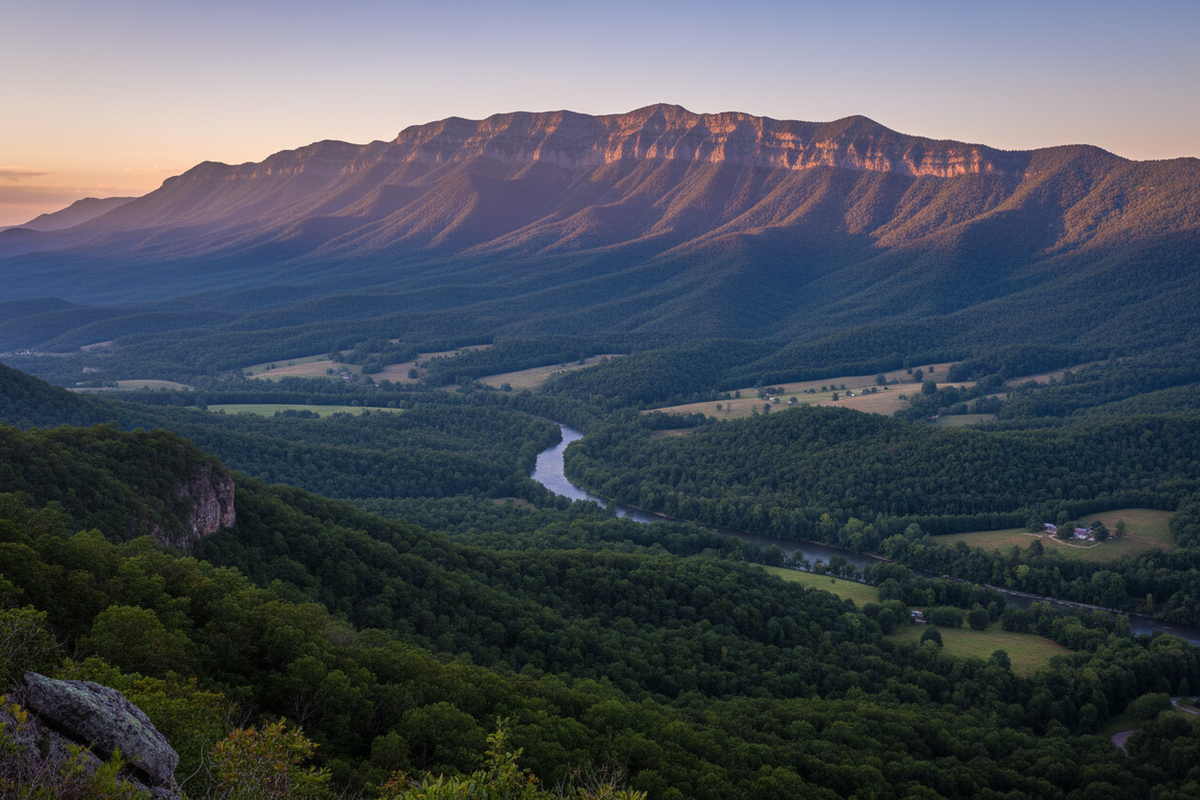
Rising long and steady across Southwest Virginia, Clinch Mountain has always shaped life in the valleys below. More than a backdrop, this ridge determined where people traveled, where they settled, and how communities learned to live with the land rather than against it.
For generations, Clinch Mountain stood as both obstacle and refuge, demanding respect while quietly offering what was needed to survive.
📜 A Natural Boundary Through Time
Clinch Mountain stretches across parts of Southwest Virginia and into Tennessee, forming one of the most prominent ridges in the region. Long before modern maps, it served as a natural boundary, separating watersheds, guiding wildlife movement, and influencing early travel routes.
For Indigenous peoples and later settlers, the ridge was not easily crossed. Passes were limited, and knowing where to travel safely required deep familiarity with the land.
🧭 A Barrier That Shaped Movement
Travel across Clinch Mountain was slow and deliberate. Steep slopes, dense forests, and rocky ground made wagons difficult to move and foot travel exhausting.
Because of this, communities formed along the mountain’s base rather than across it. Valleys became corridors of movement, while the ridge itself stood watch, shaping settlement patterns across areas like Scott County.
The mountain decided where roads would go, long before roads were ever built.
🌲 A Protector of Resources
While difficult to cross, Clinch Mountain offered protection and resources. Its forests provided timber for homes, firewood for warmth, and game for food. Springs and streams flowing from the ridge supplied fresh water to nearby farms and homesteads.
The mountain also acted as a buffer, shielding valleys from harsh winds and weather. In this way, it protected the communities that grew along its edges.
🛠 Living with the Land
Mountain families learned quickly that survival depended on understanding Clinch Mountain rather than trying to conquer it. Hunting seasons, planting times, and travel plans all followed the mountain’s rhythms.
Knowledge of the ridge was passed down through stories and experience. Where the trails were safest. Where storms gathered first. Where game crossed most often.
This relationship created a culture rooted in observation, patience, and respect.
📍 A Presence That Still Defines the Region
Today, Clinch Mountain remains a defining feature of the Southwest Virginia landscape. Its long silhouette still shapes views, weather patterns, and a sense of place.
Though modern roads now cut through areas once considered impassable, the mountain’s influence is still felt. It reminds us that the land sets the terms, even as times change.
🌲 A Blue Ridge Whispers Reflection
At Blue Ridge Whispers, Clinch Mountain represents balance. Strength without force. Protection without control. It teaches that lasting things are built by working with what already exists.
Our candles and wax melts are inspired by that same idea, crafted with intention, shaped by tradition, and grounded in respect for the land that continues to guide us.
Leave a comment