
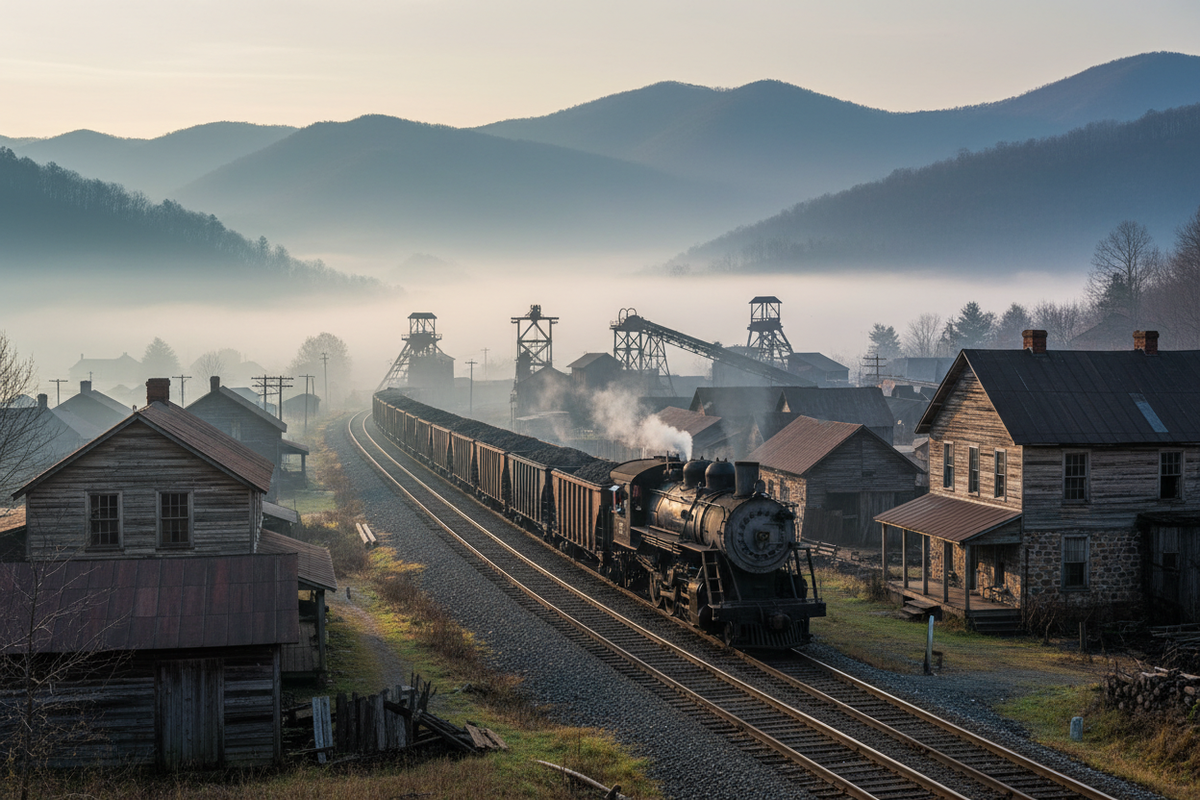
The arrival of railroads changed Southwest Virginia in ways few other forces ever had. Steel tracks cut through valleys that had once known only footpaths and wagon roads, opening the region to industry, opportunity, and upheaval. Along those tracks rose coal camps, places of hard work, close quarters, and lives shaped by the rhythm of the trains.
For better and for worse, railroads and coal camps reshaped mountain life.
📜 When the Rails Reached the Mountains
In the late nineteenth and early twentieth centuries, railroads pushed deep into the Appalachian Mountains to reach rich coal seams. Lines followed river valleys and natural gaps, connecting remote areas to distant markets.
Railroads brought:
-
Jobs and steady wages
-
Access to goods previously hard to obtain
-
Faster travel and communication
-
Outside influence and investment
For many families, the rails offered a chance at stability that farming alone could not always provide.
🏭 The Rise of Coal Camps
As coal mining expanded, companies built camps near mines and rail lines. These were self contained communities where workers and their families lived, shopped, and worshiped.
Coal camps often included:
-
Company owned houses
-
A company store
-
A school or church
-
Medical care tied to employment
Life in these camps was tightly structured. Wages were modest, hours were long, and work was dangerous, but the camps became home to thousands of families across Southwest Virginia.
⛏ Work That Shaped Generations
Coal mining demanded strength, endurance, and trust among workers. Miners relied on one another for safety deep underground, forming bonds that lasted a lifetime.
The work left its mark on bodies and communities alike. Injuries, illness, and loss were common, yet families built lives filled with music, food, and shared tradition despite the hardship.
In counties near Scott County, the influence of railroads and coal extended beyond the mines, shaping nearby towns and trade.
🏡 Community in Close Quarters
Coal camps were crowded, but they were not without warmth. Neighbors shared meals, watched one another’s children, and gathered for music and church. In many ways, the camps reflected the same values found in earlier mountain communities, resilience, cooperation, and pride in honest work.
Even under company control, people found ways to make a place feel like home.
📍 Lasting Impact on the Region
As coal declined and rail lines closed or changed purpose, many camps faded or disappeared. What remains are foundations, memories, and stories passed down through families.
The railroads left behind more than tracks. They left towns, traditions, and a deep understanding of how quickly life can change when outside forces arrive.
🌲 A Blue Ridge Whispers Reflection
At Blue Ridge Whispers, the story of railroads and coal camps reminds us that progress always carries a cost. It also shows the strength of people who adapt, endure, and hold onto community even in difficult circumstances.
Our work honors that resilience, crafting each candle and wax melt with care, intention, and respect for the lives that shaped these mountains.
Leave a comment