
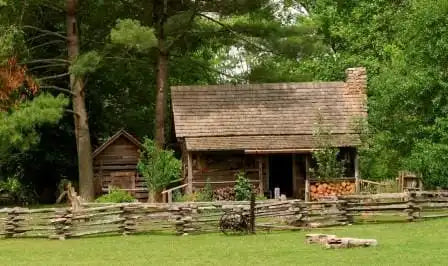
Before towns had main streets and homes had addresses, families across Southwest Virginia carved out lives one log at a time. Early Appalachian homesteads were not built for comfort or appearance. They were built for survival, shaped by the land and the seasons that ruled it.
In places like Scott County, these cabins became the foundation of mountain life and the heart of every family’s story.
📜 Built with What the Land Provided
Early settlers used what was closest and most reliable. Trees were felled by hand, notched with axes, and stacked into sturdy log walls. Chinking made from clay, mud, and moss sealed the gaps, keeping out wind and cold.
Most cabins were small, often a single room that served as kitchen, bedroom, and living space all at once. Later, as families grew, additional rooms or lean to additions were added when time and resources allowed.
Nothing was wasted. Every board, beam, and stone had a purpose.
🔥 The Hearth at the Center of Life
The hearth was the most important feature of any Appalachian cabin. It provided heat, light, and a place to cook. Meals simmered in cast iron pots while bread baked beside open flames. In winter, families gathered close, sharing warmth and stories long after the sun disappeared behind the ridges.
The hearth was also where knowledge was passed down. Children learned by watching. Skills like cooking, tool repair, and storytelling were shared in that glow.
🧺 Daily Work from Sunup to Sundown
Life on a mountain homestead followed the rhythm of daylight and seasons. Every member of the household had a role.
Daily tasks often included:
-
Tending small garden plots
-
Caring for livestock
-
Preserving food through drying, smoking, and canning
-
Mending clothes and tools
-
Gathering firewood
Work was constant, but it was shared. Community often meant neighbors helping neighbors during planting, harvest, or hard times.
🛖 Outbuildings That Made Life Possible
The cabin was only part of the homestead. Smokehouses preserved meat. Springhouses kept food cool. Root cellars stored vegetables through winter. Each structure reflected careful planning and deep understanding of the land.
These outbuildings allowed families to survive long winters and unpredictable weather, turning preparation into security.
📍 A Way of Life That Shaped the Region
Homesteads dotted valleys and hillsides wherever land allowed. Though isolated by geography, families were connected through shared traditions, church gatherings, and mills like the Bush Mill.
This way of life shaped the values still felt across Southwest Virginia today. Independence balanced with cooperation. Hard work paired with pride. Patience learned through necessity.
🌲 A Blue Ridge Whispers Reflection
At Blue Ridge Whispers, early Appalachian homesteads remind us that comfort comes from intention, not excess. These homes were built slowly, thoughtfully, and with deep respect for resources.
Our candles and wax melts honor that same spirit, crafted in small batches, rooted in tradition, and made to bring warmth to the places people gather most.
Leave a comment