
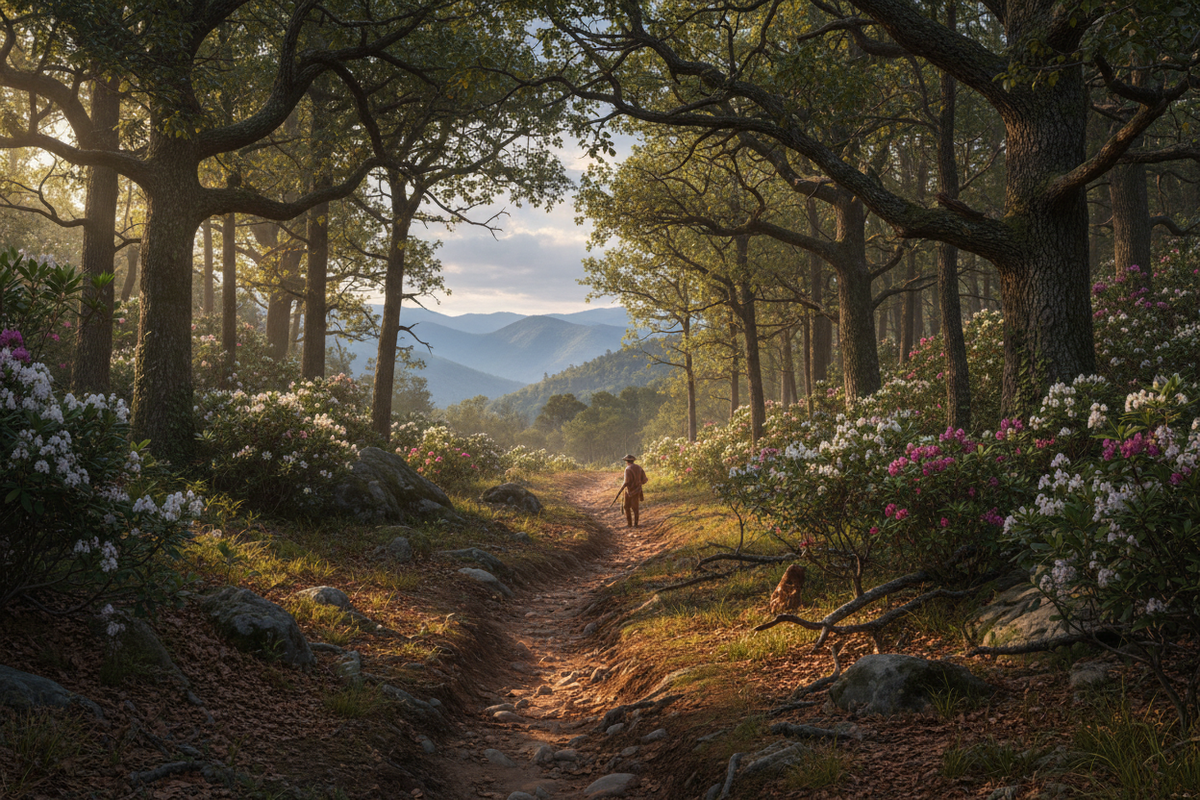
Before highways and rail lines stitched the country together, there was a narrow path through the mountains that changed everything. Known as the Wilderness Road, this route carried thousands of settlers westward and placed Southwest Virginia at the center of one of the most important movements in American history.
Though often associated with frontier legends, the Wilderness Road was not born from exploration alone. It followed knowledge that already existed.
📜 Ancient Paths Before Pioneers
Long before settlers traveled the Wilderness Road, Indigenous peoples had already established networks of trails through the Appalachians. These paths followed ridgelines, river valleys, and natural gaps that made travel possible through rugged terrain.
What settlers later called the Wilderness Road was built upon these earlier routes. The land had already shown where passage was easiest. People simply learned to listen.
🧑🌾 Daniel Boone and the Opening West
In the late 1700s, Daniel Boone helped mark and widen sections of the trail, guiding settlers through the mountains toward Kentucky and beyond.
The road passed through Southwest Virginia, funneling travelers toward the Cumberland Gap, one of the few natural breaks in the Appalachian Mountains. Families traveled by foot, wagon, and horseback, carrying everything they owned into unknown territory.
For many, this journey was a one way passage. There was no guarantee of safety, success, or return.
🏞 Why Southwest Virginia Was the Gateway
Southwest Virginia was not just a stretch of land to cross. It was a staging ground. Settlers rested, resupplied, repaired wagons, and made decisions that would define their futures.
The region offered:
-
River crossings and fertile valleys
-
Established trails and natural corridors
-
Access to mountain passes
-
Local knowledge from those already living here
Communities formed along these routes, growing into towns that still exist today.
🏡 Life Along the Road
Life along the Wilderness Road was shaped by constant movement. Inns, farms, and small settlements emerged to support travelers. Some families stayed, drawn by the land and opportunity. Others continued west, leaving behind only footprints and stories.
The road brought change, growth, and conflict, but it also connected distant regions and helped shape the nation’s expansion.
📍 Traces That Still Remain
Though modern roads now cover much of the Wilderness Road’s path, its influence is still visible across the landscape. Place names, town locations, and settlement patterns all trace back to that original route.
In and around Scott County, the echoes of the Wilderness Road remain embedded in the hills and valleys that once guided thousands toward new lives.
🌲 A Blue Ridge Whispers Reflection
The Wilderness Road reminds us that progress often follows paths laid long before we arrive. True direction comes from understanding what already exists and building with care rather than force.
At Blue Ridge Whispers, we honor that same philosophy. Every candle and wax melt we create follows traditions shaped by patience, respect, and a deep connection to place.
Leave a comment