
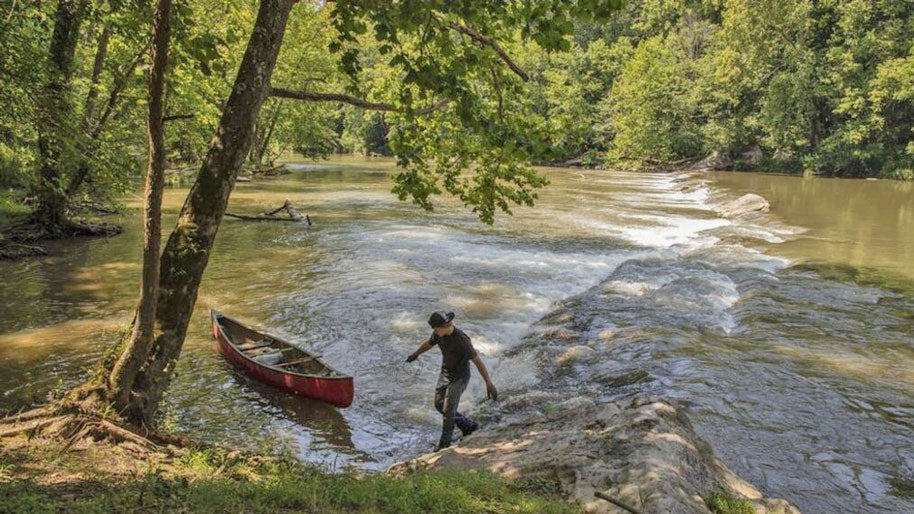
If the mountains are the bones of Southwest Virginia, the Clinch River is its lifeblood.
Long before towns, property lines, and paved roads, the Clinch River carved a natural path through the valleys of the Appalachians. It fed families, guided travelers, and quietly determined where people could live, grow food, and build communities. To understand the history of this region, you must understand the river.
📜 A River Older Than the Settlements
The Clinch River has flowed through Southwest Virginia for millions of years, shaping the land long before human footprints marked its banks. Its winding course created fertile bottomlands, gentle crossings, and natural gathering places that attracted people for thousands of years.
Indigenous communities were the first to recognize its importance. They settled near its waters, fished its depths, and followed its bends as natural travel routes through otherwise rugged terrain.
🛶 Nature’s Highway Through the Mountains
In a land where steep ridges made travel difficult, rivers became roads. The Clinch River connected distant valleys and communities, allowing people to move goods, ideas, and culture across the region.
The river provided:
-
Reliable fresh water
-
Abundant fish and wildlife
-
Fertile soil for crops
-
Natural pathways through the mountains
Later, settlers followed these same routes, often without realizing they were traveling paths shaped and used for generations before them.
🌿 One of the Most Diverse Rivers in North America
The Clinch River is not just historically important. It is also one of the most biologically diverse rivers in North America, home to an extraordinary number of freshwater mussels, fish, and aquatic species.
This diversity made the river a dependable food source for early inhabitants and remains a vital ecological treasure today. Even now, the health of the river reflects the health of the surrounding land.
🏡 Settlements Grew Where the River Allowed
Early Appalachian settlements often appeared where the Clinch slowed, widened, or crossed easily. Mills, farms, and later towns formed along its banks, relying on its steady flow for grinding grain, watering crops, and powering daily life.
Communities like those in Scott County grew not by chance, but by necessity. The river decided where life could take root.
📍 A Quiet Presence That Still Guides the Region
Today, the Clinch River still winds through the landscape, quieter perhaps, but no less important. It shapes recreation, conservation efforts, and the character of the region. Its bends and banks still tell stories to those who take the time to listen.
Stand near its waters at dawn, when fog lifts slowly from the surface, and it becomes clear why generations chose to stay.
🌲 A Blue Ridge Whispers Reflection
At Blue Ridge Whispers, we see the Clinch River as a reminder that the most powerful forces often move quietly. Like the river, true craftsmanship is steady, patient, and shaped over time.
Every candle we pour is inspired by places like this, where nature leads and people learn to follow with care and respect.
Leave a comment