
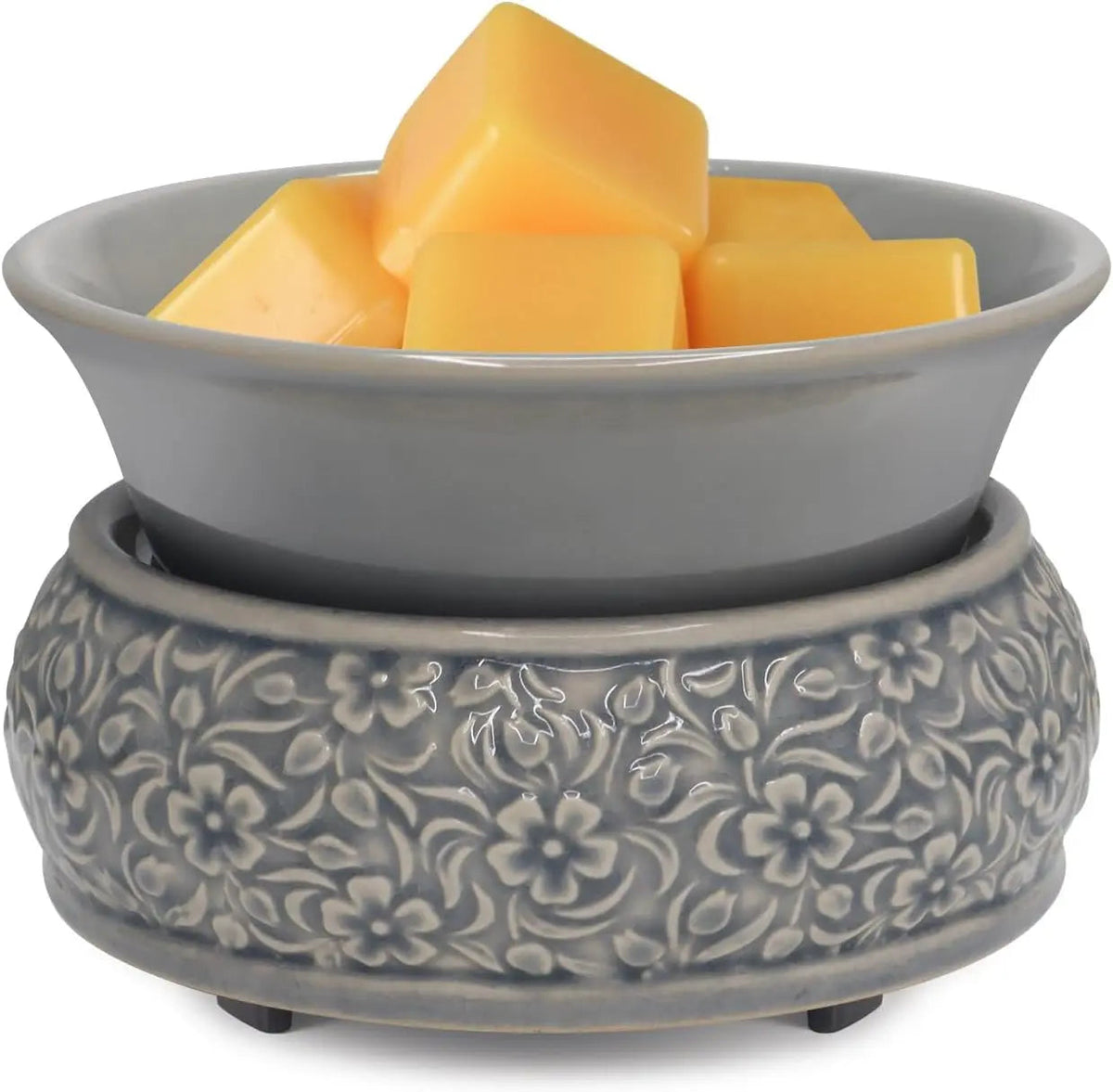
How long can you leave a wax warmer on? Follow the operating time and safety instructions for your specific warmer. There is no single hour limit that applies to every model. Turn it off when you finish enjoying the fragrance, before going to sleep, and before leaving home.
A cozy room starts with a little care. Here is how to choose a warming routine, work out how much wax to use, and know when it is time for a fresh scent.
Electric wax warmers and tealight burners need different care
An electric warmer uses a bulb or heating element. Check its manual for operating limits, the correct bulb if applicable, and any automatic shutoff instructions. A timer is a useful reminder, but it does not replace supervision or the manufacturer's directions.
A tealight wax burner uses an open flame. Never leave the candle burning unattended, and follow the instructions for both the burner and the tealight. An electric warmer's instructions do not apply to a tealight burner.
Can you leave a wax warmer on all night or all day?
Our recommendation is to switch it off before bed or whenever you leave home. If you use it during the day, stay within the manufacturer's operating instructions and turn it off when you no longer need the fragrance. Do not assume that a warmer is suitable for continuous use simply because it has no flame.
For reference, Yankee Candle's electric warmer instructions call for attended use. Scentsy's warmer safety guidance with the Boise Fire Department also advises switching the warmer off before leaving home. Always use the instructions supplied with your own model.
What if you accidentally left a wax warmer on?
Switch it off if it is safe to do so, and let the warmer and wax cool before handling them. Check for damage before using it again. If you notice a damaged cord, cracks, scorching, or unusual operation, stop using it and contact the manufacturer. Do not move a dish of hot wax or try to repair an electrical fault yourself.
How many wax cubes should you put in a warmer?
Start with your warmer's stated capacity and the directions on the wax packaging. BlueRidge Whispers wax melts come in 2.4 oz, six-cube clamshells. Start with one cube if your warmer permits that amount; add a second only if the dish has sufficient capacity and its instructions allow it. Never overfill the dish. Cube sizes vary between brands, so a cube count is not a universal measure.
For a step-by-step explanation, read how many wax cubes to use in your warmer.
How long does the fragrance last?
Fragrance life and safe operating time are different things. The scent can fade while wax remains in the dish; wax melts are warmed rather than consumed by a wick. You do not need to leave the warmer running until the wax disappears.
Replace the wax when its fragrance no longer suits you, following the warmer's instructions for cooling, removal, and cleaning. There is no ten-hour rule for every wax melt: the fragrance, amount of wax, and warmer all affect the experience. Yankee Candle's wax-melt guide explains why the wax remains as fragrance fades.
A simple routine for your next scent
- Read your warmer's instructions before use.
- Place it on a stable, suitable surface, clear of nearby objects and out of reach of children and pets.
- Use the recommended amount of wax and the correct bulb, if your model uses one.
- Switch it off before bed or leaving home, and allow it to cool before handling.
Ready to choose a fragrance? Explore our Appalachian-inspired wax melts, hand-poured in small batches in Southwest Virginia, from bakery favorites to fresh and woodsy scents.
1 comment
Excellent article!
Sandy
Leave a comment